Electric cars and environment as a taxi driver – trend, rules and the exam's green subjects
TaxiTeori · 6 min read · Last updated 2026-07-29
Electric cars, environmental zones and driving economy – how the green shift affects the taxi job and links to the exam's environment subjects.
Electric cars are taking over the taxi trade
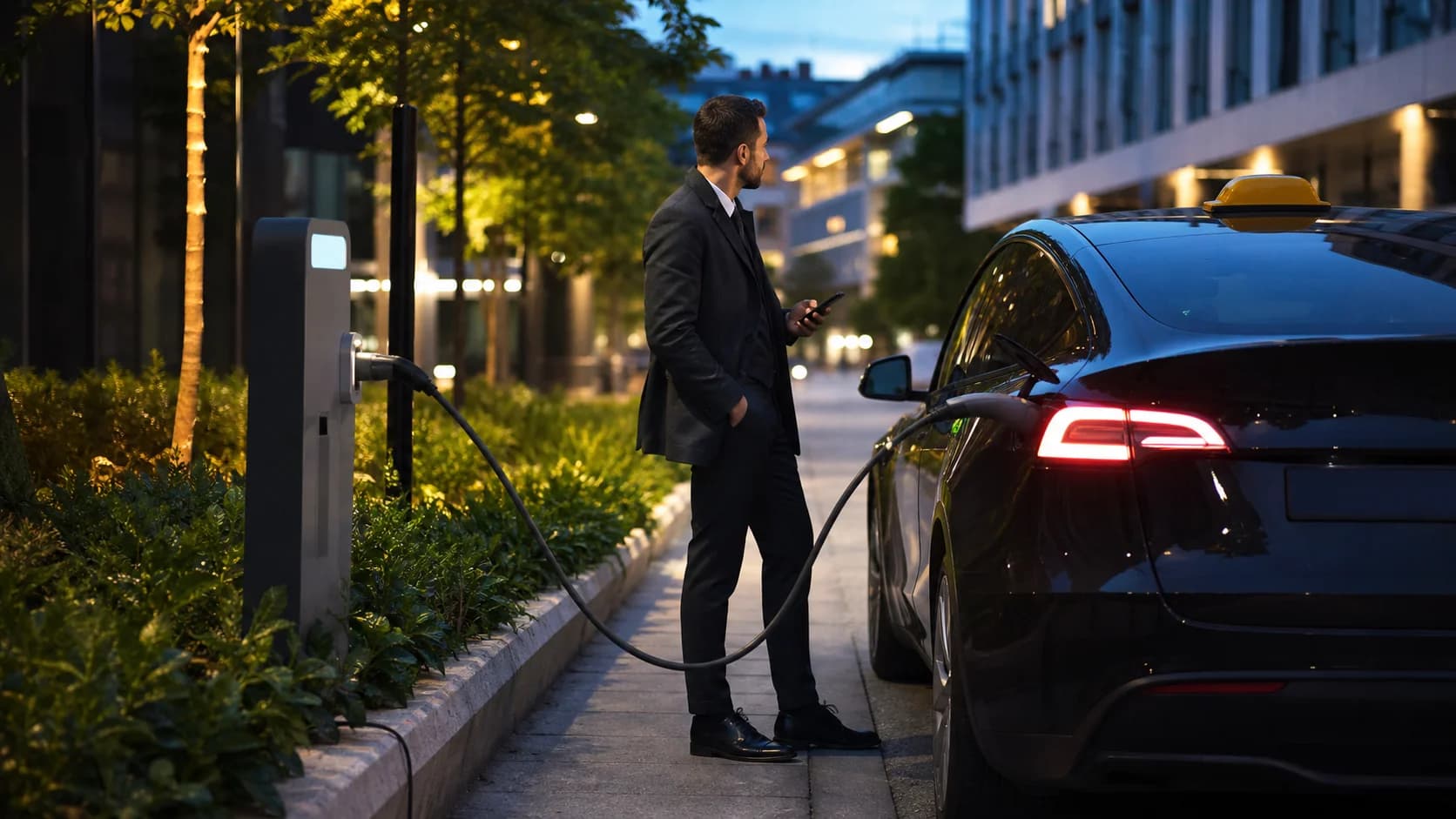
The share of electric taxis is growing fast, driven by lower running cost per kilometre, quieter operation and demands from both cities and clients for lower emissions. For the driver it shows up as a quieter work environment and new routines around charging instead of refuelling. The trend means that those new to the profession often drive electric from the start.
Environmental zones and city rules
Several Swedish cities, including Stockholm and Gothenburg, have introduced environmental zones that limit which vehicles may drive in certain areas. The rules tighten step by step and favour electric and low-emission vehicles. As a taxi driver you need to know which zones and rules apply in your city, because they affect both route choice and vehicle choice.
Driving economy and environment in the exam
Environment and driving economy are two separate subjects in test 1 (Safety and behaviour). The questions cover fuel- and energy-efficient driving, how driving style affects consumption and emissions, and the basics of environmentally adapted taxi traffic. Understanding the principles of the electric car and economical driving therefore helps you both in the exam and on the job.
What it means for you as a new driver
For a new driver, the shift means it pays to learn charging habits, energy-efficient driving and the city's environmental rules early. It keeps costs down, fits employers' requirements and is in line with where the industry is heading. Environmental knowledge is thus not just an exam question but a practical job skill.
Try the system – 10 questions