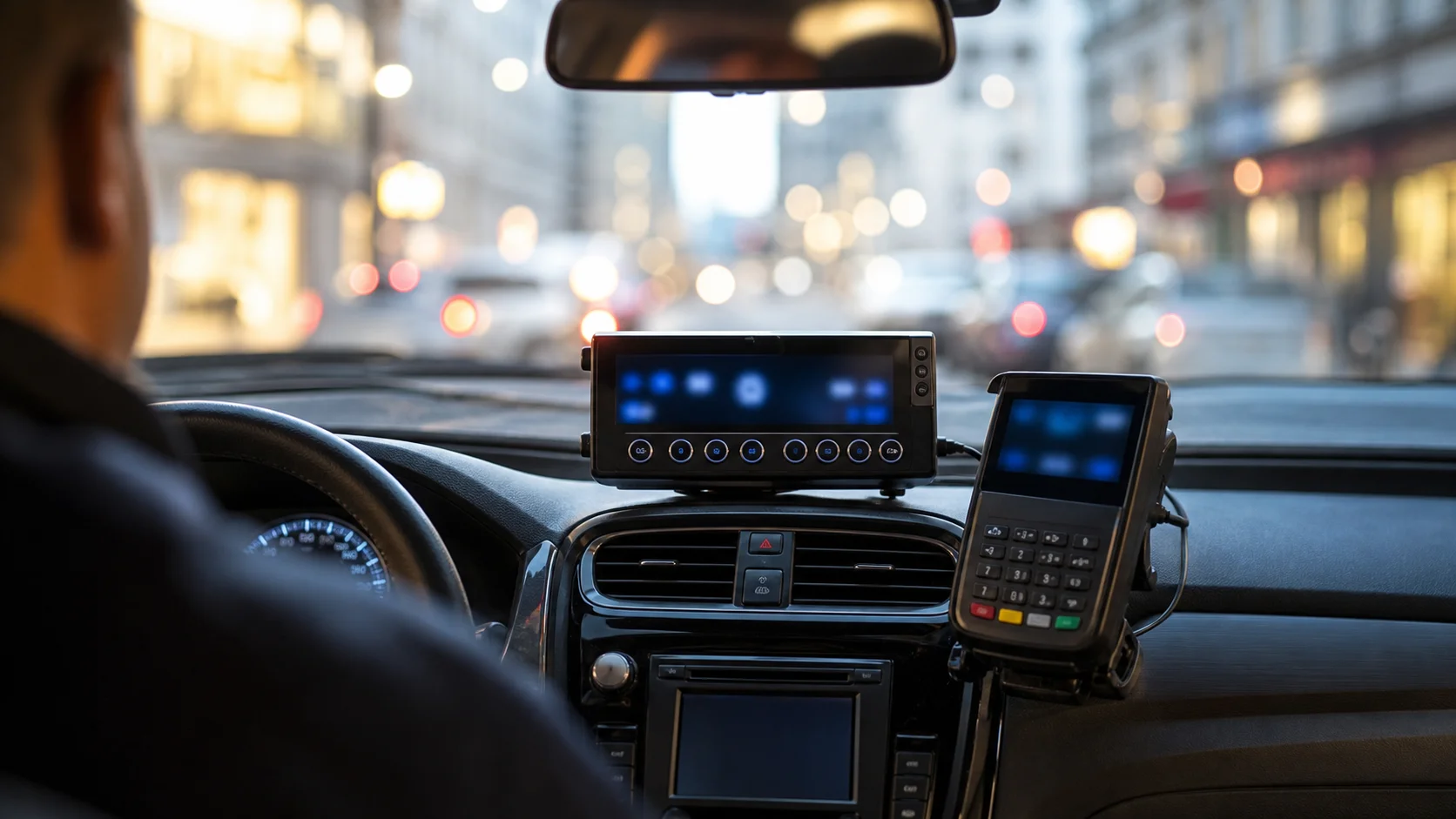
Taximeter and pricing – how the fare works in a taxi
TaxiTeori · 6 min read · Last updated 2026-07-29
Taximeter, free pricing, comparison price and the receipt rule – how a taxi fare is set and reported.
How the taximeter calculates
The taximeter calculates the fare from a combination of time and distance driven according to the set tariff, often with a base charge plus a price per kilometre and per minute. Different tariffs can apply at different times of day. As a driver, you are responsible for the right tariff being selected and for the taximeter being used correctly during the trip.
Free pricing with transparency requirements
Sweden has free pricing for taxis, which means each taxi company sets its own prices. That freedom is balanced by transparency requirements: the customer must be able to understand what the trip costs before it begins. It is this combination – freedom plus a duty of transparency – that the consumer-protection rules in the legislation part are built on.
Comparison price and price information
If the highest comparison price exceeds a set level, the taxi must have a special yellow-and-black price-information sticker (comparison price) clearly visible on the window, so the passenger can easily compare prices between cars. The comparison price is a standardised price for a defined example trip, precisely to make different cars comparable. This is a classic test 2 question.
Receipt and fixed price
The customer has the right to a receipt that itemises the trip, and the receipt is printed from the taximeter. For pre-booked trips, driver and customer can agree a fixed price in advance instead of a taximeter price. Knowing the rules around receipts, tariffs and fixed prices is part of the basics both in the exam and in daily work.
Try the system – 10 questions